22.07.48: AN EXTRAORDINARY discovery in the Masada fortifications in Israel suggests
that one of Jesus's early disciples, Joseph of Arimathea, came to England shortly after the death of
Christ.
The find lends weight to the idea that England received the teachings of Christ directly, before
the Gospels were even written, rather than by slow diffusion via the Roman Empire. It also
supports the notion, favoured by poets, romantics and hippies, that the blood and sweat of Christ,
lovingly recovered from Christ's body at the Crucifixion and preserved by Joseph, found its way to
England to form a crucial part of the Arthurian legend of the Holy Grail. Historians have dismissed
the idea as fanciful.
The find consists of a series of fragments from the letters of the Apostle St Philip written
during his mission to Gaul. The letters mention his companion Joseph of Arimathea and Joseph's
planned visit to Britain.
Medieval legend says that Joseph was buried at Glastonbury. Excavations to find and open the tomb
will start immediately. Meanwhile, thousands of pilgrims have converged on the site and already
miracles are being reported, including the flowering of the Glastonbury thorn, allegedly the wooden
staff planted by Joseph.
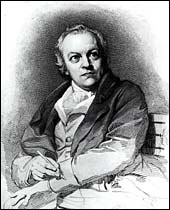
The idea of an early Christian mission to England has inspired poets and writers from the Middle
Ages to William Blake, author of the English national anthem, one of whose lines imagines Christ
himself "walking on England's mountains green".
"Historians who have dismissed this as myth may now have to think again," said Alathea
Smithson-Wright, Queen's Professor of History at Cambridge. "Maybe King Arthur and the Holy Grail will
turn out to be true as well," she said.
Religious and political leaders have welcomed the discovery as justifying the new "England first"
policy.
"So God is English after all," chuckled the Very Reverend Trevor Arkwright, leader of the United
Churches of England and Wales.
The prime minister said the find showed that "the English got there first in religion as well". He
also promised to double state funding for archeology. DRS